Part 4 of From Drawing to Nameplate explains how examination, inspection, pressure testing, nameplate marking and certification fit together in ASME Section VIII, Division 1 original construction for filter housings.
AI-generated editorial illustration for The Dirty Filter; not a technical drawing, certification mark or field-test instruction.
The industry. The decisions. The details.
Follow the business of filtration—from the equipment on the plant floor to the forces shaping the market.
After installing a new filter bag, verify the seal, close the housing correctly, vent and restart gradually, check for leaks and record clean differential pressure.
Editorial illustration: deliberate restart checks after a bag filter change.
Part 3 of the ASME housing series explains how approved drawings become controlled fabrication work: material traceability, fit-up, welding qualification evidence, inspection coordination, documented repairs and final supplier records.
AI-generated editorial illustration of fabrication and welding coordination for a pressure-vessel filter housing; not a technical drawing or certification record.
Part 3 of The Dirty Filter’s bag housing maintenance series: why harder-to-tighten closures are a maintenance signal, not an invitation to use a bigger wrench.
Editorial illustration: closure inspection and seal care matter more than applying more force.
Part 2 of the ASME filter-housing series explains how material specifications, design conditions, wetted seals, MTRs, heat traceability and substitutions should be handled before a vessel reaches the nameplate.
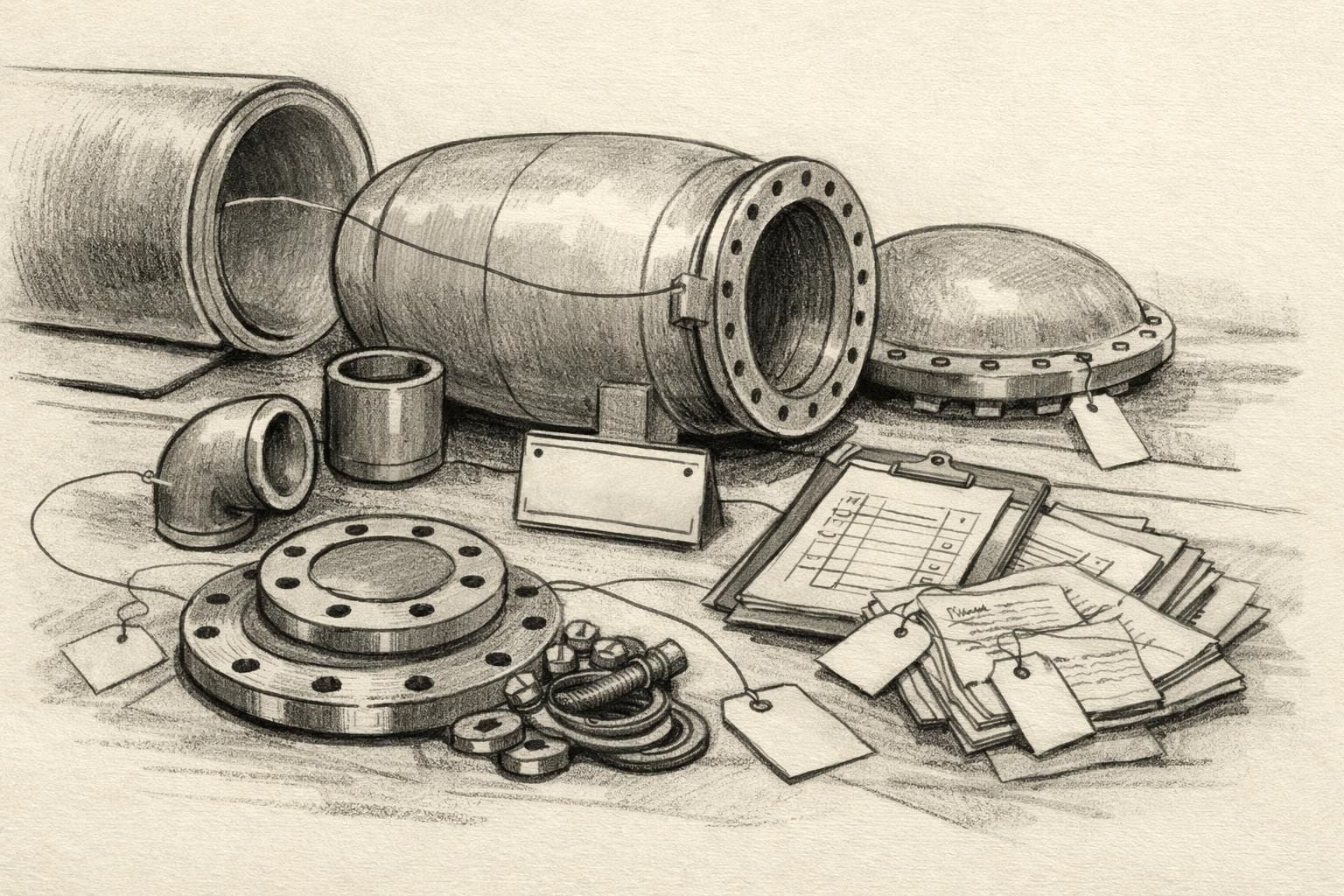
AI-generated editorial illustration, not a technical drawing: material records and traceability paperwork beside unmarked pressure-vessel components.
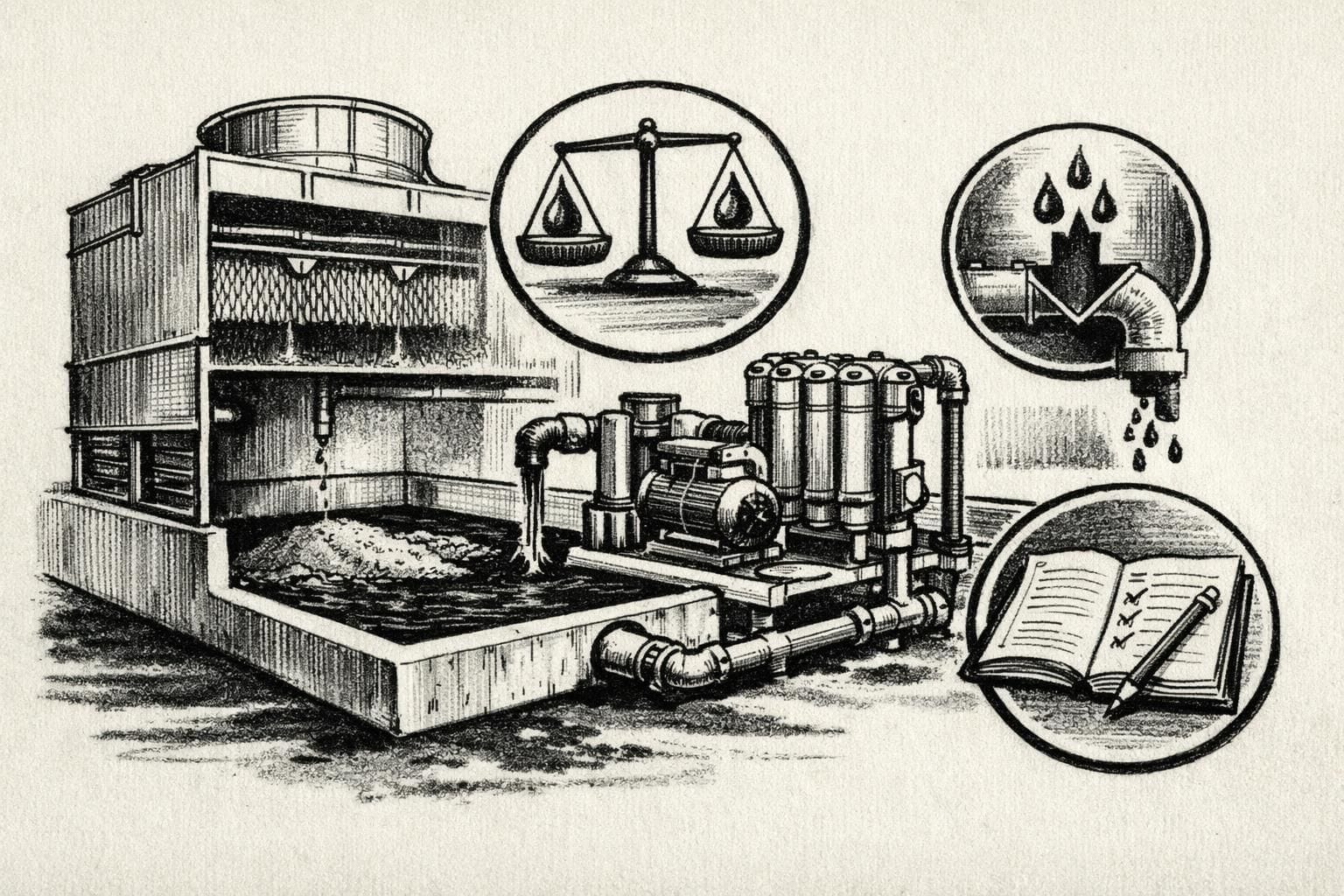
Cooling-tower filtration can help with solids and fouling, but the business case starts with water balance, chemistry limits and maintenance ownership — not a cartridge or separator spec sheet.