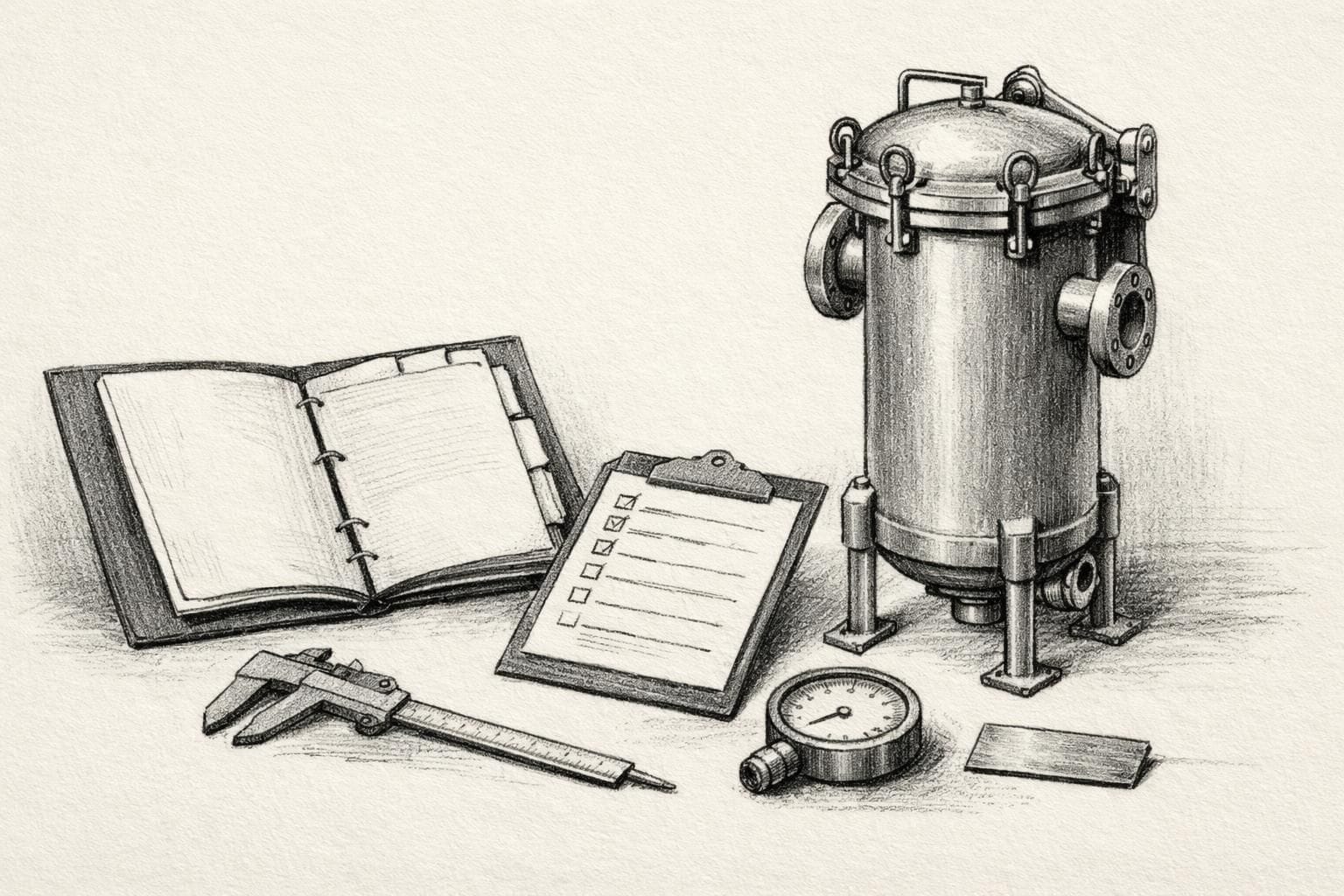
A pressure-vessel drawing is not a housing until the shop can prove what it built. For a filtration buyer, that is the practical value of the fabrication package: it turns a design pressure, material callout, nozzle schedule and closure detail into material traceability, qualified welding, examination coordination, documented repairs and a nameplate/data package that an owner can defend later.
This part stays deliberately inside the Section VIII Division 1 fabrication lane. It is not a Section IX welding-procedure tutorial, and it does not quote controlled clause numbers, weld settings, acceptance criteria or heat-treatment rules from memory. Those details belong in the applicable Code edition, the purchase specification, the manufacturer’s quality program and the Authorized Inspector review. The buyer’s job is to know what evidence to ask for before the vessel leaves the shop.
From drawing to production
ASME’s public scope for BPVC Section VIII Division 1 says the rules apply to the “design, fabrication, inspection, testing, and certification” of pressure vessels, and it specifically names fabrication methods such as welding, forging and brazing. The same ASME page describes vessels operating at internal or external pressures exceeding 15 psig, while also noting requirements for materials, nondestructive examination and inspection acceptance standards. That is the authoritative frame. The article below translates it into buyer-facing production controls, not substitute Code text.
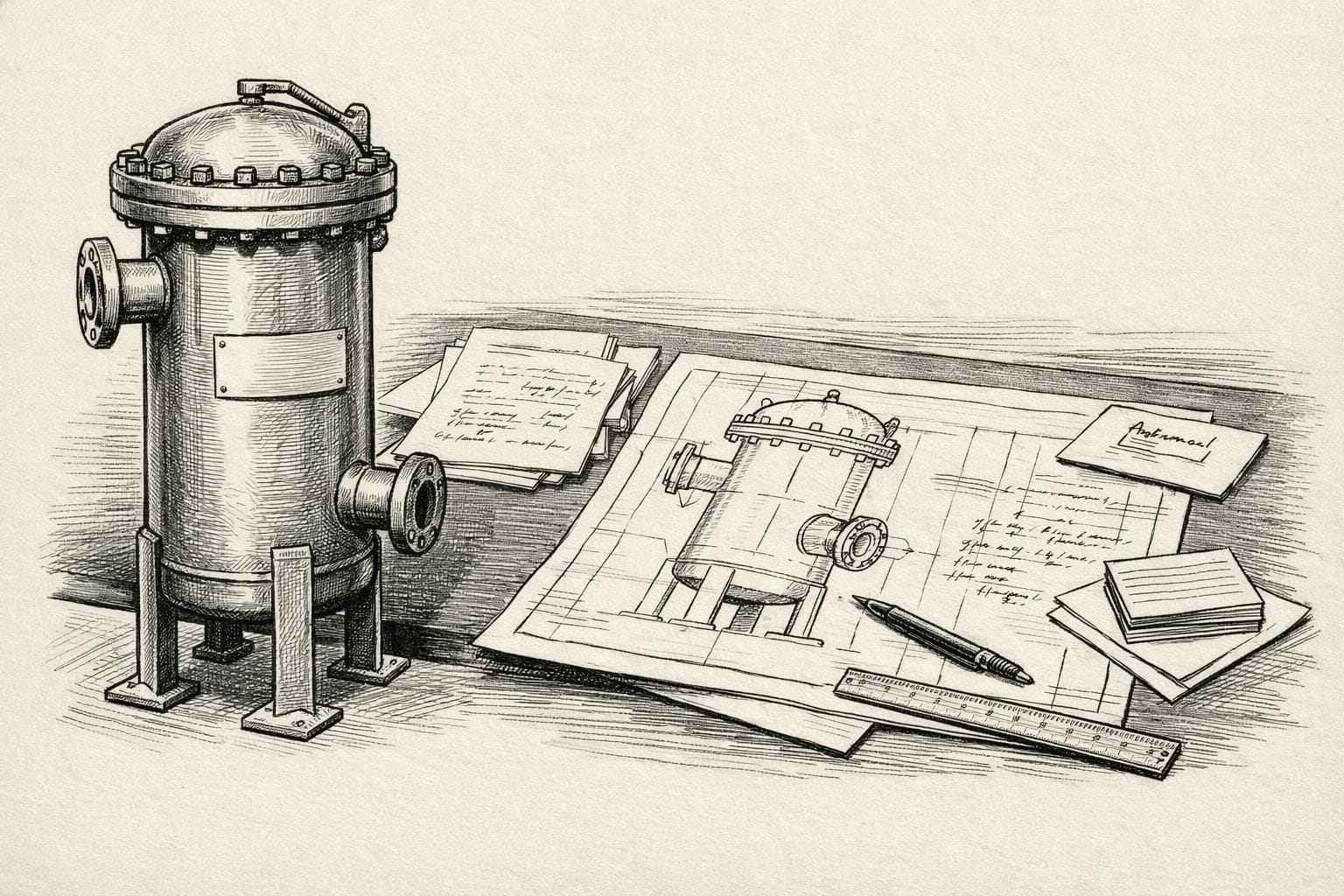
Take a hypothetical duplex-basket bag housing ordered for a chemical plant utility loop. The approved drawing shows shell diameter, straight side length, head geometry, inlet and outlet nozzles, vent and drain couplings, support legs, design pressure, design temperature, corrosion allowance, material specification, gasket and closure details. A good fabrication review asks whether the shop traveler, material issue records, fit-up checks and inspection hold points match that drawing. If a nozzle has moved to clear a platform, or a support detail has changed to suit available plate, that is no longer merely “shop preference.” It is a drawing/specification change that needs engineering disposition.
Material identification is not paperwork decoration
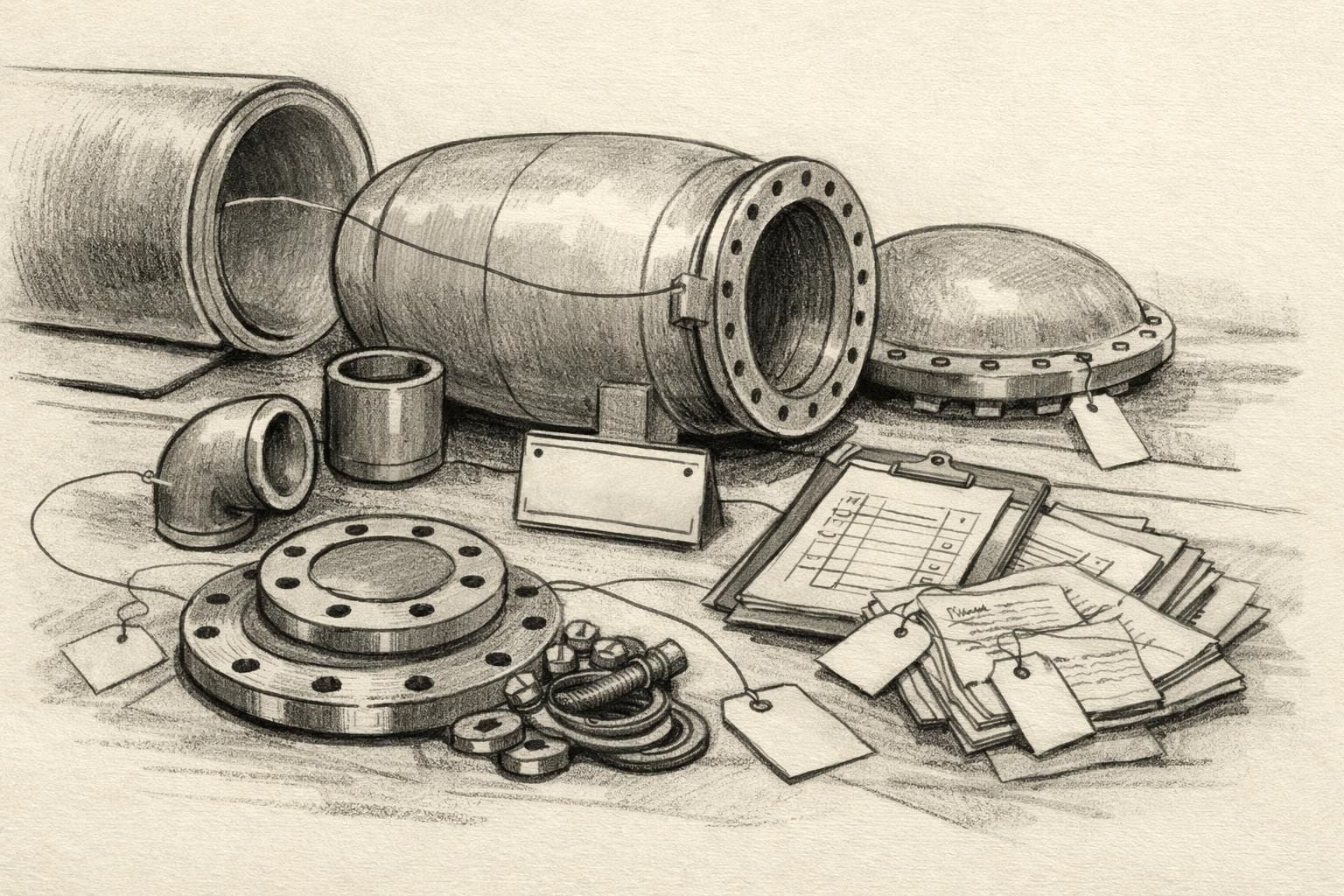
Material control is the first place a clean design can become a dirty procurement problem. The buyer does not need to micromanage the stockroom, but should require traceable material identification for pressure-retaining parts and other specified components. Heat numbers, material test reports where required by the purchase order or Code program, positive material identification when specified, and records of substitutions should line up with the bill of materials and drawing revision.
The editorial recommendation is simple: do not accept “316 stainless” as a complete evidence package for a code housing. Ask how the supplier prevents grade mix-ups, how cut pieces remain identified after nesting and forming, and how replacement material is approved if the shop cannot use the original lot.
Forming, fit-up and joint preparation
Section VIII work is not just about final hydrotest pressure. The vessel has to be shaped and assembled so the welds and examinations the design relies on can actually be performed. Formed heads, rolled shells, nozzle penetrations and closure rings should be checked against drawing dimensions and tolerances before welding hides the problem.
For filtration housings, common risk points include out-of-round shells that fight basket sealing, nozzle rotations that complicate installation, leg or lug alignment that loads the piping, and gasket surfaces distorted by welding heat. These are partly workmanship issues, but they become commercial issues when the owner has to install, seal and maintain the housing for years.
Joint preparation belongs in the same conversation. The buyer should not prescribe amperage or bead sequence unless it has the competence and contract reason to do so. It should ask whether weld preparations, fit-up gaps, cleaning controls and tack-weld practices are covered by approved shop procedures and inspection hold points. Where the governing Code and purchase specification require qualified welding procedure and personnel evidence, request the compliance record rather than a sales assurance.
Qualification compliance without turning the purchase order into a welding textbook
Welding qualification compliance is a pass/fail gate, not a place for vague comfort language. The supplier should be able to show that applicable welding procedures, procedure qualification records and welder or welding-operator qualifications are controlled under the shop’s quality program for the scope of work. The buyer does not need to reproduce the Code in the requisition, but it should name the required Code edition, certification expectations, owner specifications and document submittals.
ASME’s certification-process page says the review or survey evaluates the applicant’s quality manual and implementation of the quality program, and that certification is granted only after the applicant successfully demonstrates implementation. ASME’s broader certification page also describes obtaining required standards, arranging an Authorized Inspection Agency, preparing the quality manual and training personnel. For buyers, that means “built by a code shop” should connect to an auditable quality system, not just a logo in a brochure.
Examination coordination, repairs and final records
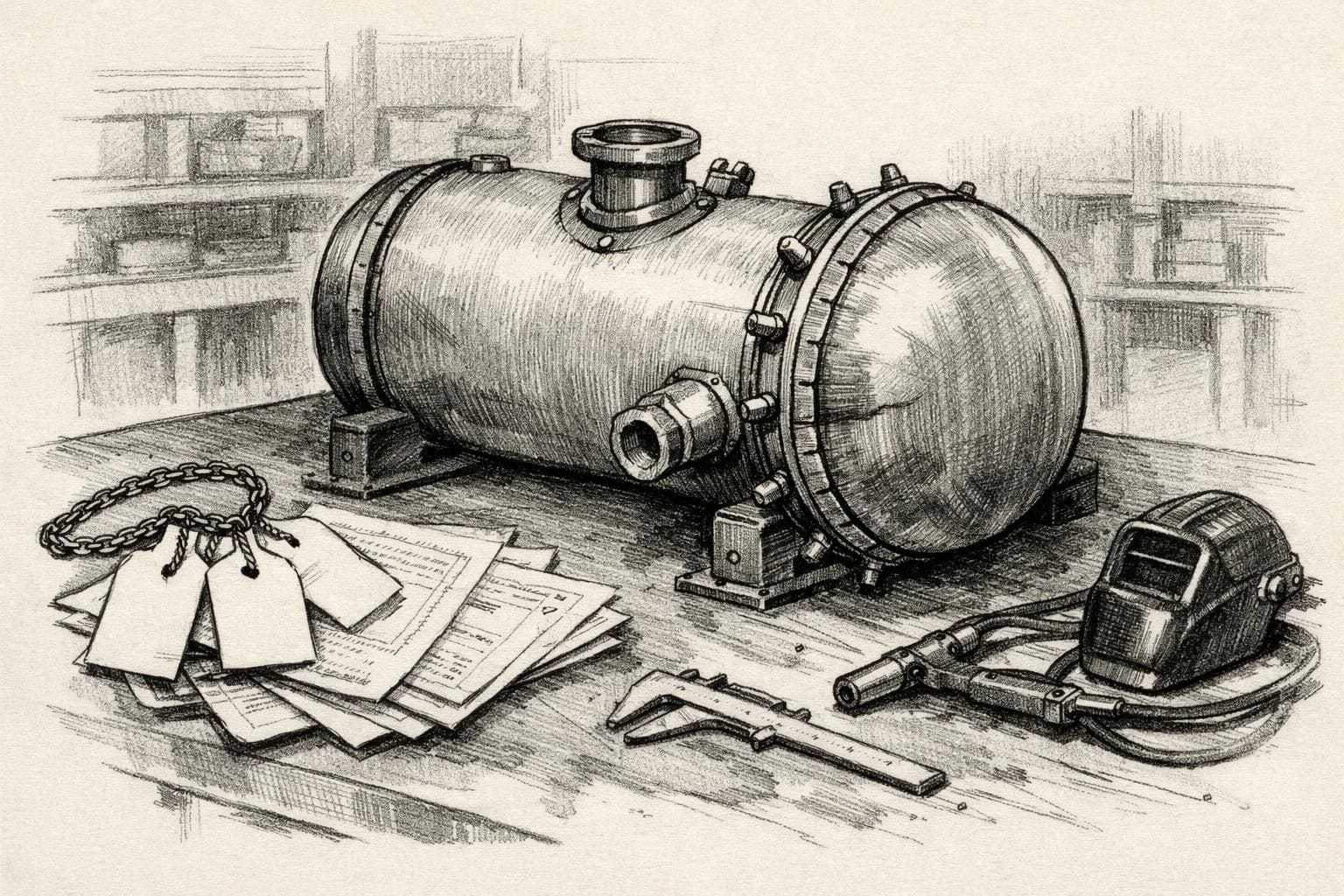
Nondestructive examination, inspection acceptance, pressure testing, heat treatment and repair acceptance are controlled specifics. Do not let a quote bury them under “standard inspection.” Ask which examinations are required by the drawing, Code construction path, joint category, owner specification and inspector hold points. Ask who coordinates the Authorized Inspector, who signs off nonconformances, and how repairs are documented after excavation, rewelding and re-examination.
Repairs deserve special attention. A weld repair may be routine for a competent shop, but the owner still needs the record: what was found, how it was dispositioned, what procedure was used, what examination confirmed closure and whether any drawing, calculation or nameplate/data-report item changed. If the answer is “we fixed it,” the record is incomplete.
Supplier questions that separate practice from proof
- Which exact Code edition, addenda if applicable, and owner specification are you building to?
- Which parts are pressure-retaining, and how will their material identity remain traceable through cutting, forming, fit-up and welding?
- What drawing revision will production use, and how are shop changes approved?
- What welding qualification evidence is available for this scope, without turning the submittal into an uncontrolled procedure manual?
- Where are inspection hold points, and who coordinates the Authorized Inspector or customer witness points?
- How are nonconformances and weld repairs documented, re-examined and included in the final turnover package?
- What exactly will be on the nameplate and final records, and what should the buyer not infer from marketing language?
The difference between a fabricated housing and a defensible pressure vessel is the chain of evidence. The drawing starts the chain. Material identification, fit-up control, qualified welding, examination coordination, repair records and final certification keep it intact. For filtration engineers and buyers, that chain is where reliability, code compliance and commercial leverage meet.
Sources and references
- “BPVC.VIII.1 - BPVC Section VIII-Rules for Construction of Pressure Vessels Division 1,” ASME, publication date not listed; retrieved observation 2026-10-04. Supports the documented scope of Section VIII Division 1 for design, fabrication, inspection, testing and certification; pressure-vessel scope over 15 psig; materials, welding/fabrication methods, NDE/inspection acceptance standards and certification-mark context.
- “ASME Certification Process,” ASME, publication date not listed; retrieved observation 2026-10-04. Supports the claim that certification review evaluates a quality manual and implementation of a quality program against associated standard requirements before a certificate is granted.
- “Certification and Accreditation,” ASME, publication date not listed; retrieved observation 2026-10-04. Supports the role of ASME conformity assessment, required standards, Authorized Inspection Agency arrangements, quality manual preparation and personnel training.
- “ASME Boiler and Pressure Vessel Code (BPVC),” ASME, publication date not listed; retrieved observation 2026-10-04. Supports the broader BPVC context as a technical source for manufacturing, construction and operation of boilers and pressure vessels, and notes periodic Code updates.
- “ASME Code Pressure Vessel Design,” Pressure Vessel Engineering Ltd., published 2018-05-01 per observation metadata; retrieved 2026-10-04. Used as a commercial engineering-practice source for the practical link between calculations, shop-floor drawings and code vessel work; not treated as authoritative Code text.