From Drawing to Nameplate: Materials Requirements
The materials line on an ASME filter-housing drawing is not a shopping note. It is where design pressure, design temperature, process chemistry, fabrication method, inspection records and future maintenance all start to converge. A housing can be beautifully welded and still be a bad purchase if the material callout is vague, the wetted parts are not defined, or the shop cannot trace the steel in the shell back to acceptable documentation.
This second installment stays inside ASME BPVC Section VIII, Division 1. ASME’s public scope page says Division 1 provides requirements for the design, fabrication, inspection, testing and certification of pressure vessels operating at internal or external pressures above 15 psig, and that specific requirements apply to classes of material and fabrication methods such as welding, forging and brazing. That public page is enough to frame the issue, but not enough to quote controlled Code paragraphs, allowable stresses or acceptance rules. Those details need the licensed Code edition and technical review.
A hypothetical housing
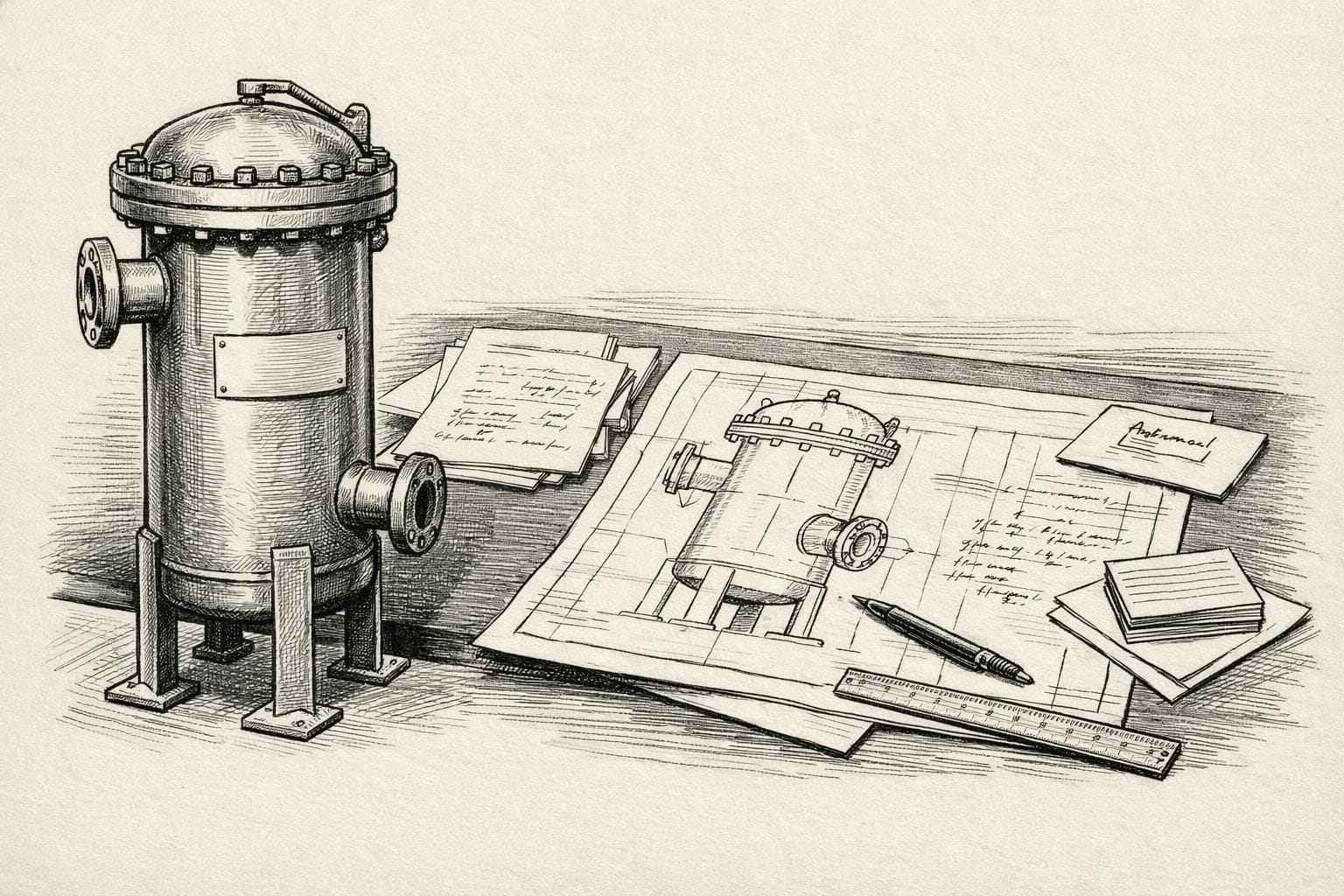
Consider a hypothetical duplex bag-filter housing for a chemical line: 150 psig design pressure, 180 °F design temperature, liquid service, flanged inlet and outlet, bolted closure, drain, vent and an internal basket support. The drawing says “ASME Section VIII, Division 1” and shows a U-stamp nameplate requirement. That is a start, not a complete material specification.
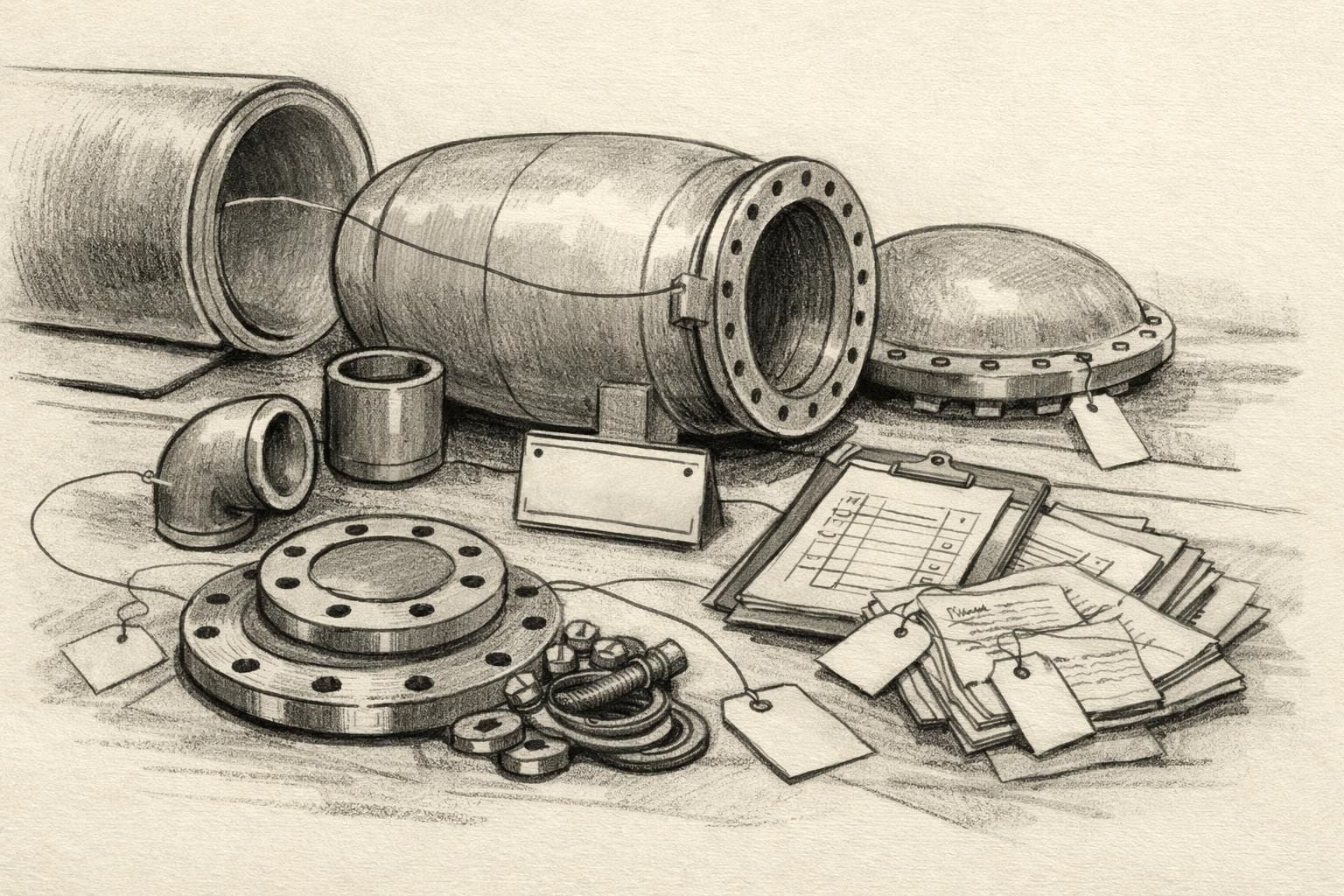
The buyer still needs to know which pressure-retaining parts are included in the Code scope: shell, heads, closure components, nozzles, reinforcing pads, flanges, bolting and welded attachments. The purchasing specification should identify the product form for each relevant part — plate, pipe, forging, fitting, bar or bolting — and not just a familiar alloy family. “316 stainless” may communicate an expectation in casual buying language, but the fabricator needs a Code-acceptable material specification, grade, product form and edition basis. If a part is pressure-retaining, the documentation burden is different from a handle, support leg or non-pressure accessory.
Material choice is application-dependent
For filtration buyers, the hardest material mistakes often come from treating alloy choice as a catalog preference. Carbon steel may be economical for dry compressed air or benign water service. Stainless may be selected for cleanability or corrosion resistance. Duplex, higher nickel alloys or lined vessels may be considered when chlorides, acids, oxidizers or temperature make ordinary stainless a poor bet. None of those choices is universal. The same alloy can behave differently when concentration, temperature, aeration, solids, cleaning chemicals or shutdown conditions change.
That is why the design conditions and service description need to travel with the RFQ. A useful request states design pressure, design temperature, operating range, fluid, pH where relevant, chloride or oxidizer exposure where known, cleaning chemistry, solids loading, expected cycles and whether vacuum or external pressure is possible. ASME’s Division 1 scope includes pressure vessels under internal or external pressure; a housing that may see vacuum during draining, steam-out or pump shutdown should not leave that condition implicit.
Corrosion, wetted seals and the parts people forget
Materials are not only shell metal. In a filter housing, wetted seals and closure gaskets can be the first compatibility failure. Elastomer selection is not established by the ASME nameplate; it depends on the process fluid, temperature, cleaning method and exposure time. A metal housing specified for a corrosive service can still leak, swell a gasket or contaminate product if the seal package is treated as an afterthought.
Ask the supplier to separate pressure-retaining metallic materials, non-pressure metallic internals and wetted nonmetallic materials. Basket material, perforated support parts, hold-down springs, O-rings, closure gaskets and drain/vent seals should be visible on the bill of materials. If the supplier proposes a different seal or alloy after order placement, treat it as an engineering change, not a clerical substitution.
MTRs, heat numbers and traceability
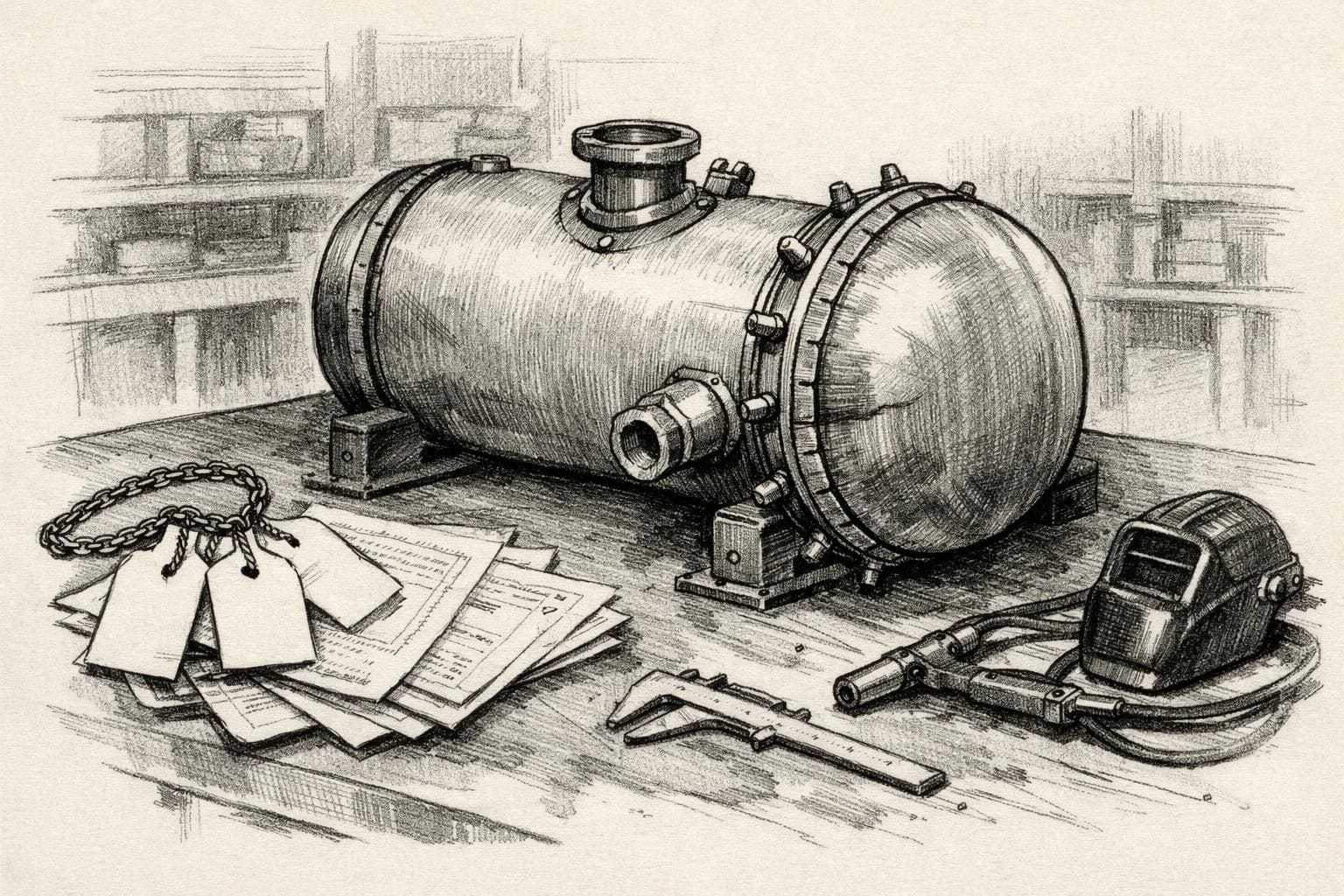
A serious ASME housing purchase should include a documentation expectation before fabrication starts. At minimum, buyers should ask what material test reports will be supplied for pressure-retaining parts, how heat numbers will be transferred or recorded during cutting and forming, and how the final data package connects the nameplate vessel back to the materials used in the shell, heads, nozzles and bolting.
ASME’s certification-process page describes review of a manufacturer’s quality manual and implementation of its quality program against the associated ASME standard. That public statement supports the broader point: documentation control is part of the manufacturing system, not an optional favor at shipment. It does not, by itself, prove the exact MTR or heat-traceability rule for a particular vessel. For that, the buyer’s inspector, engineer or Authorized Inspector needs to work from the applicable Code edition and the manufacturer’s approved quality system.
Substitutions and paperwork
Material substitutions are where cost pressure quietly enters the vessel. A shop may have a different plate thickness, a dual-certified stainless grade, an alternate flange material or a bolting change in stock. Some substitutions may be harmless or even conservative. Others can break corrosion assumptions, design calculations, weld procedure assumptions or documentation continuity.
The rule for the buyer is simple: no undocumented substitutions. Require written notice, engineering acceptance, updated drawings or bill of materials where needed, and a final data package that matches the actual vessel. If the substitution affects pressure-retaining material, corrosion allowance, design temperature, weld procedure, postweld heat treatment assumptions, impact-testing assumptions or nameplate data, it belongs in technical review before the vessel ships.
Supplier questions
- Which edition of ASME BPVC Section VIII, Division 1 is the vessel being designed and certified to?
- Which parts are pressure-retaining, and what material specification, grade and product form applies to each?
- What design pressure, design temperature, corrosion allowance and external-pressure or vacuum condition are on the drawing?
- Which wetted seals, gaskets and internal parts are included in the material review?
- What MTRs will be included in the final data package, and how will heat numbers be traceable through fabrication?
- How are material substitutions reviewed, approved and reflected in the final documentation?
- Will the delivered nameplate and data report match the final as-built materials and design conditions?
The practical lesson is that “ASME” does not replace a material specification. It raises the cost of ambiguity. A buyer who defines materials clearly at RFQ stage is not being difficult; they are protecting corrosion performance, inspection continuity and the value of the nameplate they are paying for.
Sources and references
- “BPVC.VIII.1 - BPVC Section VIII-Rules for Construction of Pressure Vessels Division 1,” ASME, publication date not listed. Supports the article’s scope statement that Division 1 addresses design, fabrication, inspection, testing and certification for pressure vessels over 15 psig, and that specific requirements apply to material classes and fabrication methods.
- “ASME Boiler and Pressure Vessel Code (BPVC),” ASME, publication date not listed. Supports BPVC context and the need to specify the applicable edition because ASME describes continuing Code updates and a two-year edition cycle.
- “ASME Certification Process,” ASME, publication date not listed. Supports the quality-program and documentation-control discussion; ASME describes review of the applicant’s quality manual and implementation of the quality program against the associated ASME standard.
- “ASME Code Pressure Vessel Design,” Pressure Vessel Engineering, published May 1, 2018. Secondary engineering commentary supporting the design-by-rules framing; not used as Code authority.
- “Spherical and Cylindrical Pressure Vessels,” Wermac, publication date not listed. Secondary explainer corroborating the broad pressure-vessel-code coverage of materials, design, fabrication, examination, inspection, testing and certification; not used as Code authority.
Technical-review note: This draft does not quote controlled ASME Code paragraphs, allowable stresses, impact-test rules, material-table values or certification forms. Those items require review against the licensed Code edition and the manufacturer’s approved quality system.