
Welcome to The Dirty Filter. This publication is for the people who specify, buy, sell, maintain and work with filtration equipment—and for anyone who wants a clearer view of the business behind it.
Our starting point is simple: a useful filtration story should help you understand a decision. What does the equipment actually do? Which operating conditions matter? What does the documentation establish, and what still needs to be checked?
What you will find here
Markets looks at applications and customer needs. Operations focuses on the practical questions around running equipment. Technology explains separation methods and the claims made for them. Supply Chain covers purchasing, replacement parts and supplier documentation. Analysis puts costs and tradeoffs into context.
Our Engineering Reference section is a working shelf of charts, document links and selection guides. It includes chemical-compatibility considerations, O-ring resources, micron-rating questions, housing documents, pressure-drop guidance and the Class 150 flange chart.
Useful information, with its limits attached
We want readers to be able to follow a factual claim back to a named source. An OEM's product claim is not the same thing as an independent test. An example calculation is not a promise of savings. A reference chart is not approval to use a component in a particular service.
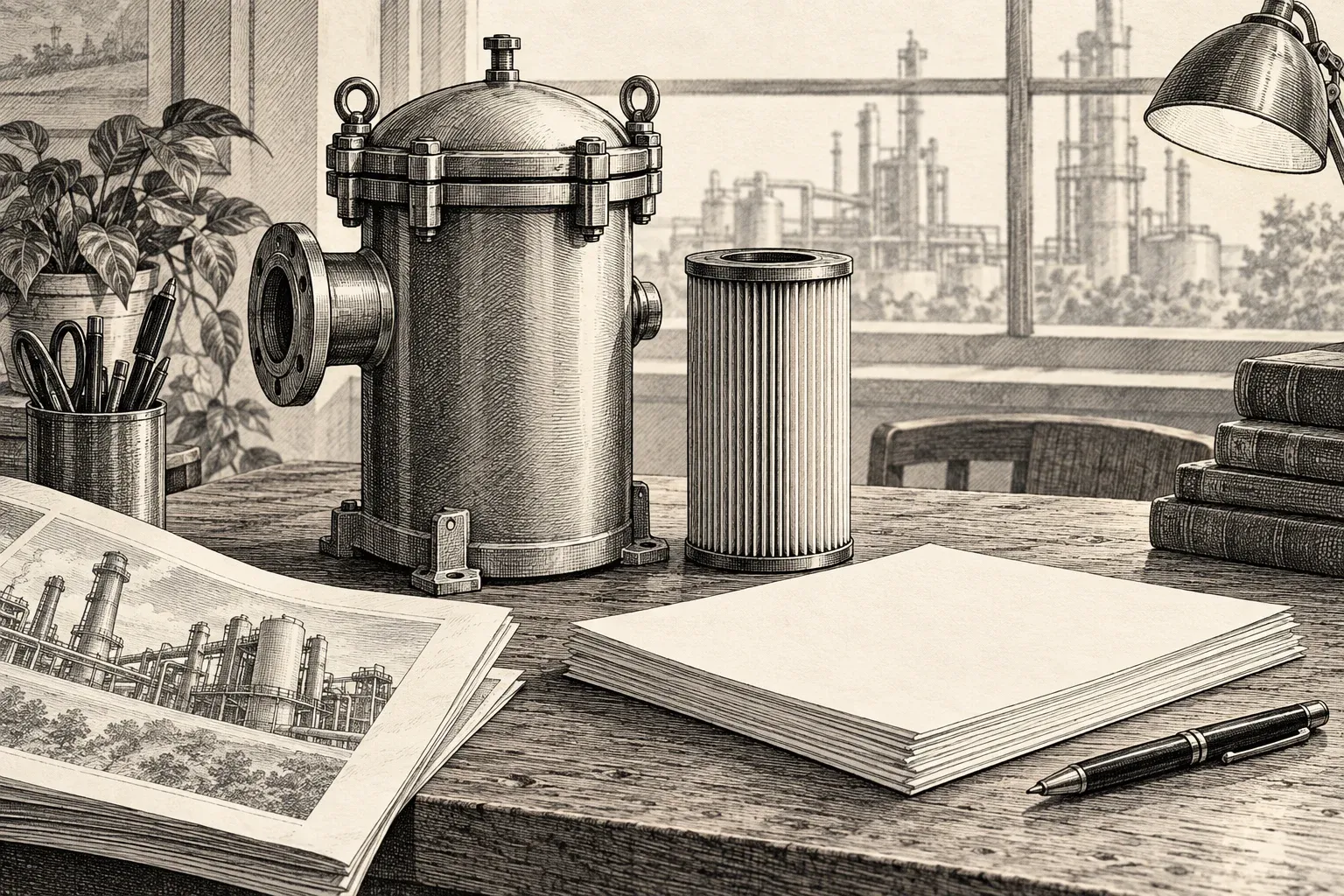
We will distinguish sourced explanations from editorial judgments, identify illustrative artwork, and keep the source documents close to the articles that use them. When a claim needs stronger support, leaving it unpublished is preferable to presenting uncertainty as fact.
Start with the question
You do not need to read the site in order. Start with the category that matches your problem, follow the reference links, and bring the resulting questions to the responsible engineer, equipment supplier or qualified maintenance team.
The Dirty Filter is a publication, not a substitute for a manufacturer's manual, a plant's safety program or professional engineering judgment. Our aim is to make those conversations better informed.
Thanks for reading. Let's get into the details.
Editor's introduction. This article describes the publication's purpose rather than reporting a researched industry trend.