Part 3 of The Dirty Filter’s Four-Part Bag Housing Maintenance Series
There is an unofficial maintenance tool found in plants everywhere.
The bigger wrench.
A closure bolt becomes difficult to tighten.
Get a longer wrench.
The lid doesn’t want to seal.
Pull harder.
The nut is getting difficult to turn.
Put a pipe on the handle.
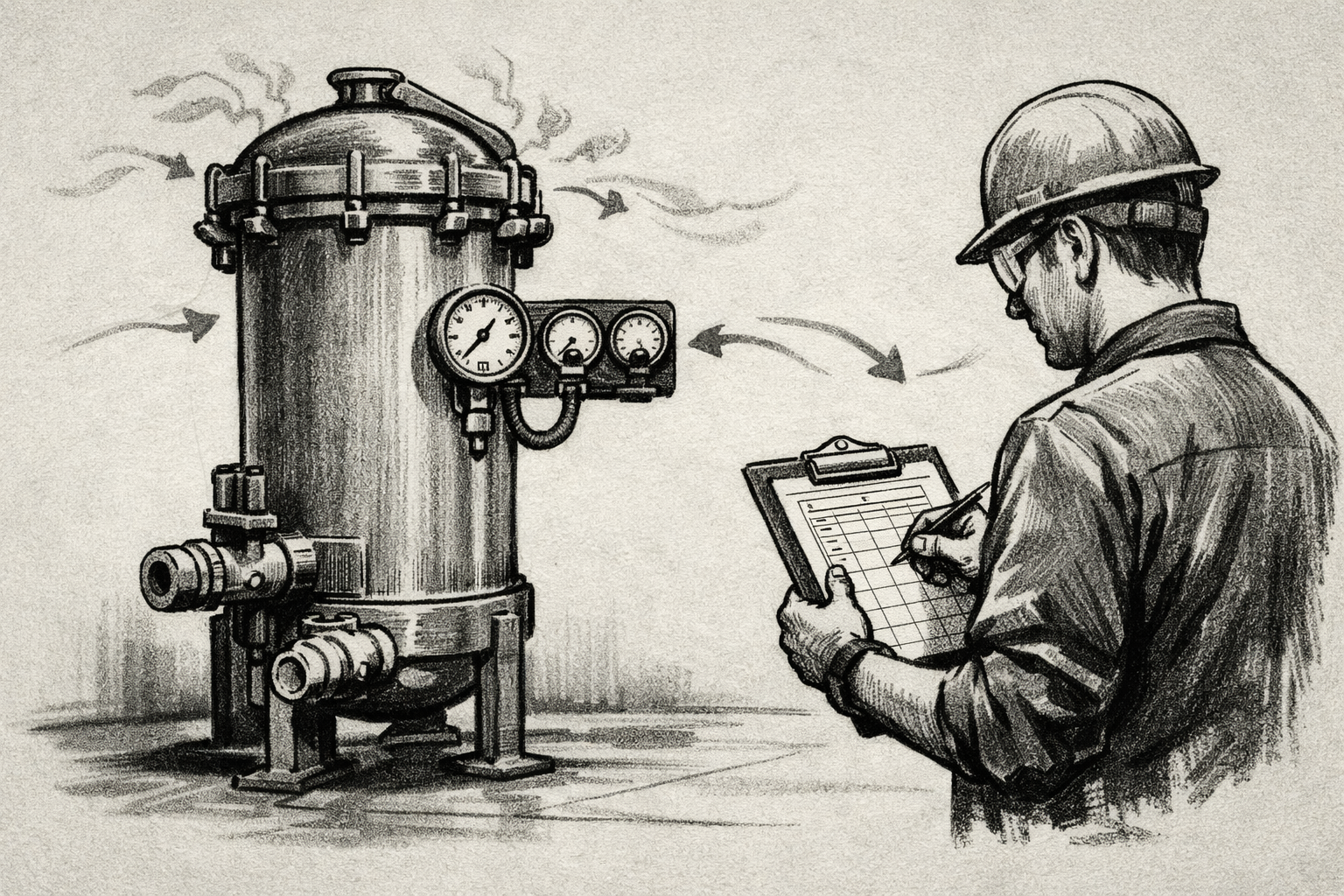
The equipment is trying to tell you something.
Listen to it.
Closure Bolts Are Maintenance Items
Swing-bolt closures are mechanically simple.
That doesn’t mean they’re maintenance-free.
Every time the housing is opened and closed, the threads move.
Those threads can accumulate dirt, corrosion and process contamination.
They can gall.
Threads can become damaged.
Bolts can bend.
Pins and pivot points can wear.
And lubrication can disappear.
The result is increasing friction.
That’s important for more than operator convenience.
When a threaded fastener is tightened, the relationship between the force applied to the fastener and the resulting closure load depends heavily on friction.
A clean, correctly maintained thread behaves differently from a dry, damaged or corroded one.
So when an operator says:
“This one always takes more force,”
the answer shouldn’t automatically be:
“Pull harder.”
Clean Them
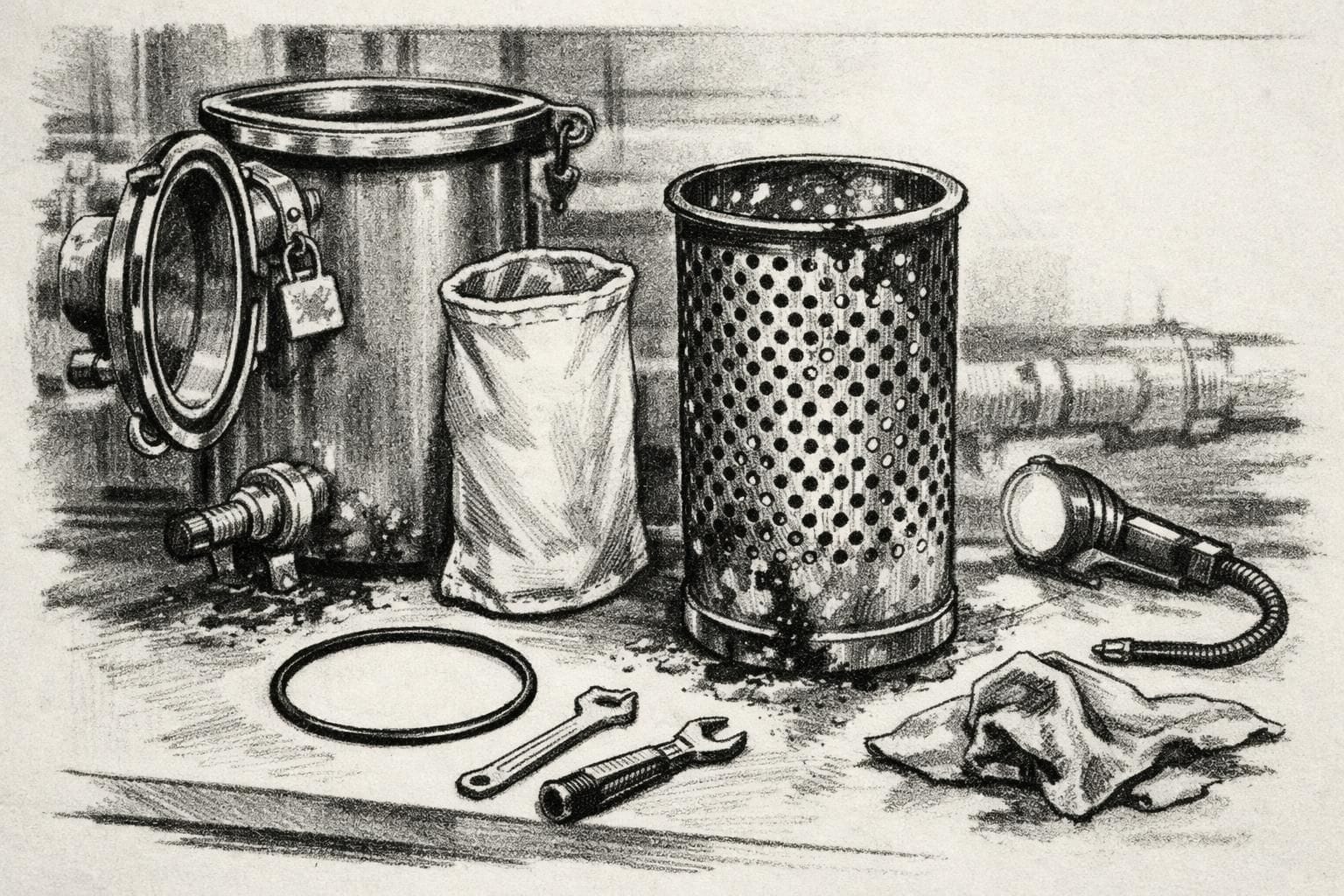
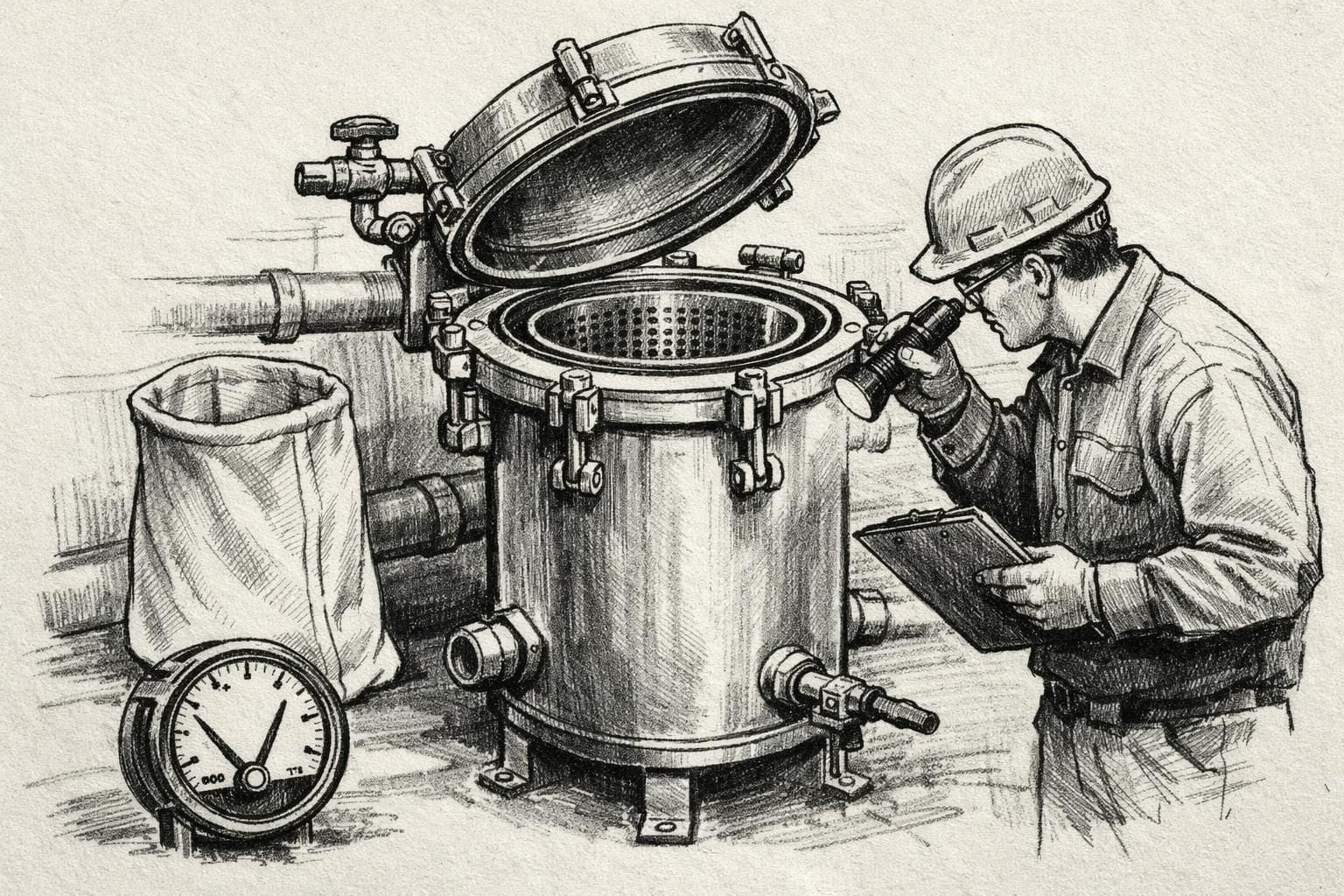
Inspect closure hardware periodically.
Look at the threads.
Look for corrosion.
Look for galling.
Check for bending.
Inspect the pins and retaining hardware.
Check hinge and pivot points.
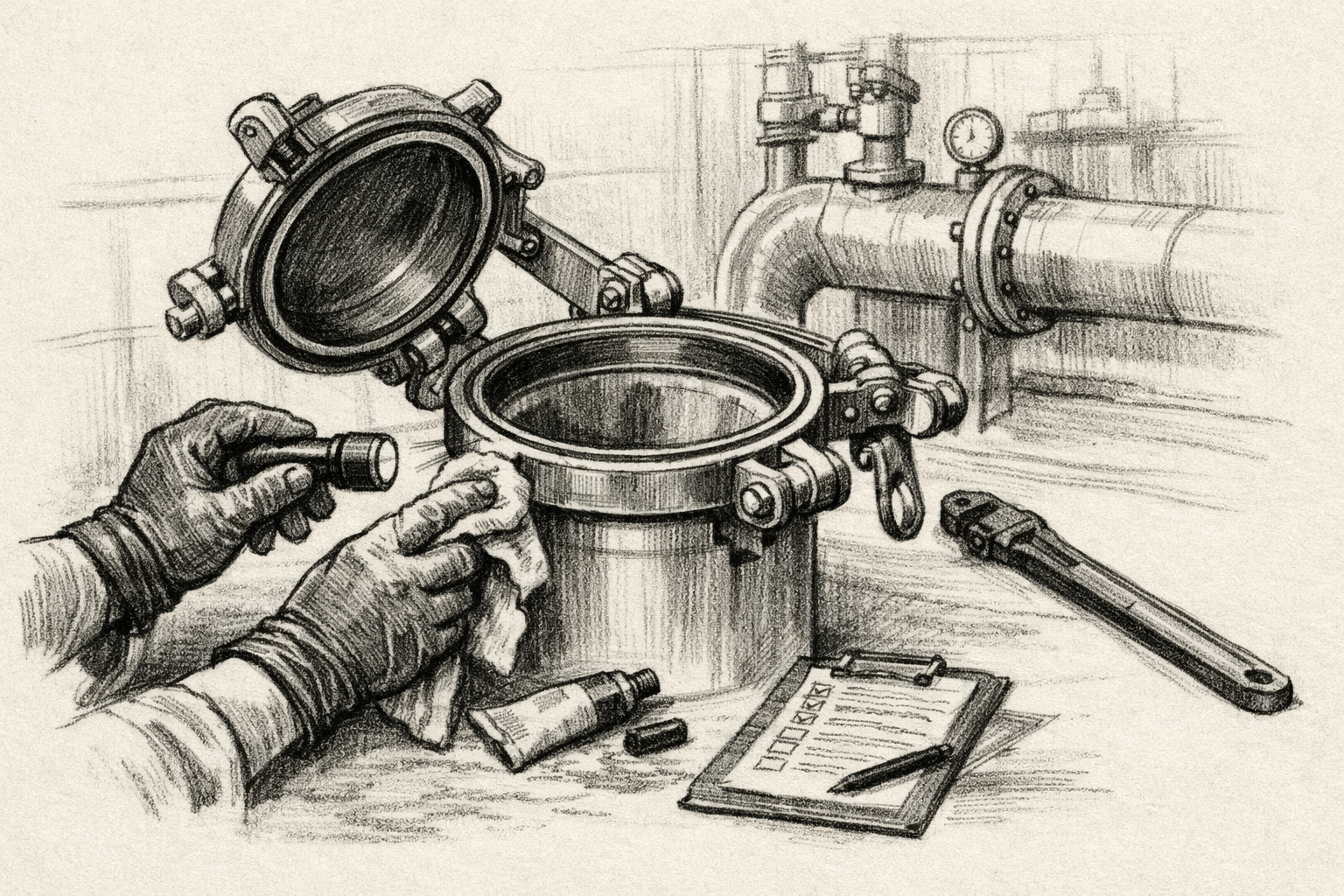
If the hardware is dirty, clean it appropriately.
Damaged closure components should be evaluated and replaced as required rather than being forced to continue operating.
Lubricate Them Correctly
Where specified by the manufacturer and appropriate for the process environment, closure threads and designated lubrication points should be lubricated.
But that doesn’t mean grabbing the nearest can of grease.
Lubricant selection can depend upon fastener materials, temperature, process requirements, sanitation requirements and the housing manufacturer’s specifications.
The purpose isn’t merely to make the nut easier to turn.
Properly maintained threads help provide more consistent closure loading.
That’s what matters.
Tighten the Closure Evenly
Another common mistake is fully tightening one bolt and then moving around the housing.
A multi-bolt closure should generally be brought together progressively using the manufacturer’s specified tightening sequence—often an alternating or cross-pattern approach for applicable designs.
The objective is uniform seal compression and even closure loading.
If the housing requires excessive force to seal, investigate why.
The gasket may be damaged.
The sealing surface may be dirty.
The gasket may be displaced.
Hardware may be damaged.
The lid may be misaligned.
There may be another mechanical problem.
Increasing force can temporarily hide one problem while creating another.
Never “Give It One More Turn” Under Pressure
This deserves its own section.
If a pressure-containing closure begins leaking after startup, don’t walk over with a wrench and tighten it.
Shut the equipment down according to the facility’s approved procedure.
Isolate it.
Depressurize it.
Then determine why it leaked.
A pressure-containing closure is not something to adjust while loaded simply because the leak appears small.
Your Housing Shouldn’t Be a Wrestling Match
There is a useful maintenance indicator that requires no instrumentation whatsoever.
Ask the people changing the filters:
Is this housing becoming harder to open or close?
Operators notice mechanical deterioration long before it appears on a maintenance report.
“This bolt always sticks.”
“You have to push the lid sideways.”
“That nut never feels right.”
“This one leaks unless you really crank it down.”
Those comments are data.
Write them down.
Investigate them.
A properly maintained closure should behave predictably.
Next week
The final installment follows the entire process back online.
We’ll cover proper bag installation, bypass prevention, venting trapped air, controlled startup, leak inspection and the one number worth recording immediately after installing every new filter bag.
Because maintenance isn’t finished when the lid closes.
Technical contribution: Clear Blue Filtration
Never loosen, tighten, adjust or open a pressure-containing closure while the equipment is pressurized. Follow the manufacturer’s instructions and the facility’s approved isolation and lockout/tagout procedures.