Part 2 of The Dirty Filter’s Four-Part Bag Housing Maintenance Series
A filter bag tears.
Maintenance replaces it.
Another bag fails.
The supplier gets a phone call.
“Your bags are tearing.”
Sometimes that’s exactly what happened.
Sometimes the bag is the victim.
Sitting behind nearly every industrial filter bag is a component that receives considerably less attention: the support basket.
That Basket Is Doing Real Work
When liquid flows through a filter bag, differential pressure develops across the filter media.
That pressure pushes the bag outward.
The basket provides the mechanical support that prevents the filter bag from simply expanding under that load.
It isn’t just there to hold the bag upright.
It is part of the mechanical system.
That means its condition matters.
A basket can become damaged through corrosion, erosion, mishandling, excessive differential pressure or years of service.
Perforations can deform.
Welds can fail.
Sharp edges can develop.
The basket itself can become distorted.
Then a new filter bag is installed against it.
The process starts.
The bag is forced against the damaged area.
Eventually the bag fails.
The evidence removed from the housing is a torn filter bag, so naturally the filter bag gets blamed.
The actual failure may have started with the basket.
Pull the Basket Out
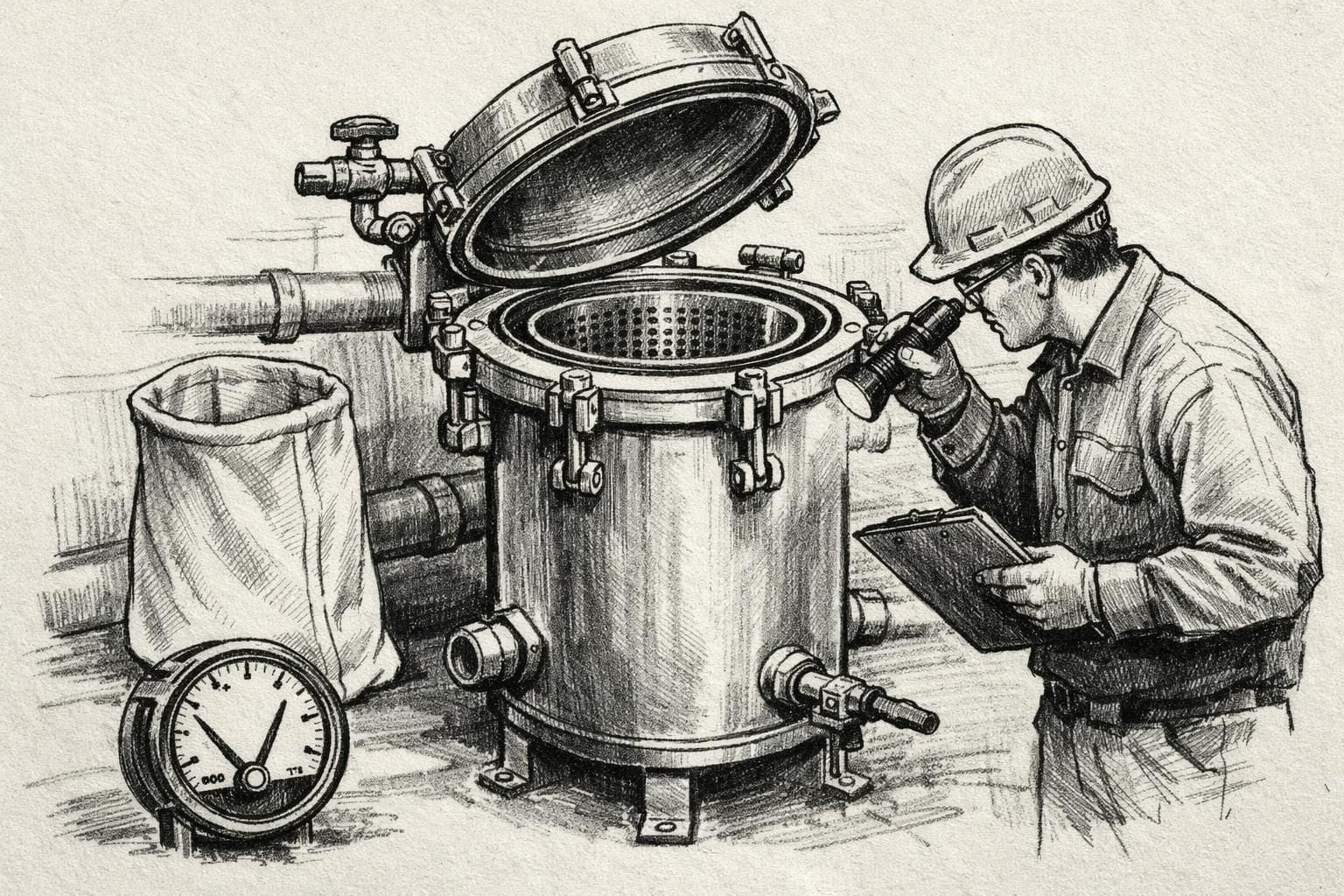
When practical, periodically remove the support basket instead of inspecting only the portion visible from above.
Look for deformation.
Check the perforations.
Inspect welds.
Look for corrosion and pitting.
Run the appropriate inspection over areas that could contact the bag and look for projections or sharp edges.
Check the rim.
Make sure the basket hasn’t collapsed or changed shape.
And clean it.
Installing a new filter bag into a basket covered with old process contamination defeats part of the purpose of replacing the filter.
Then Look Underneath It
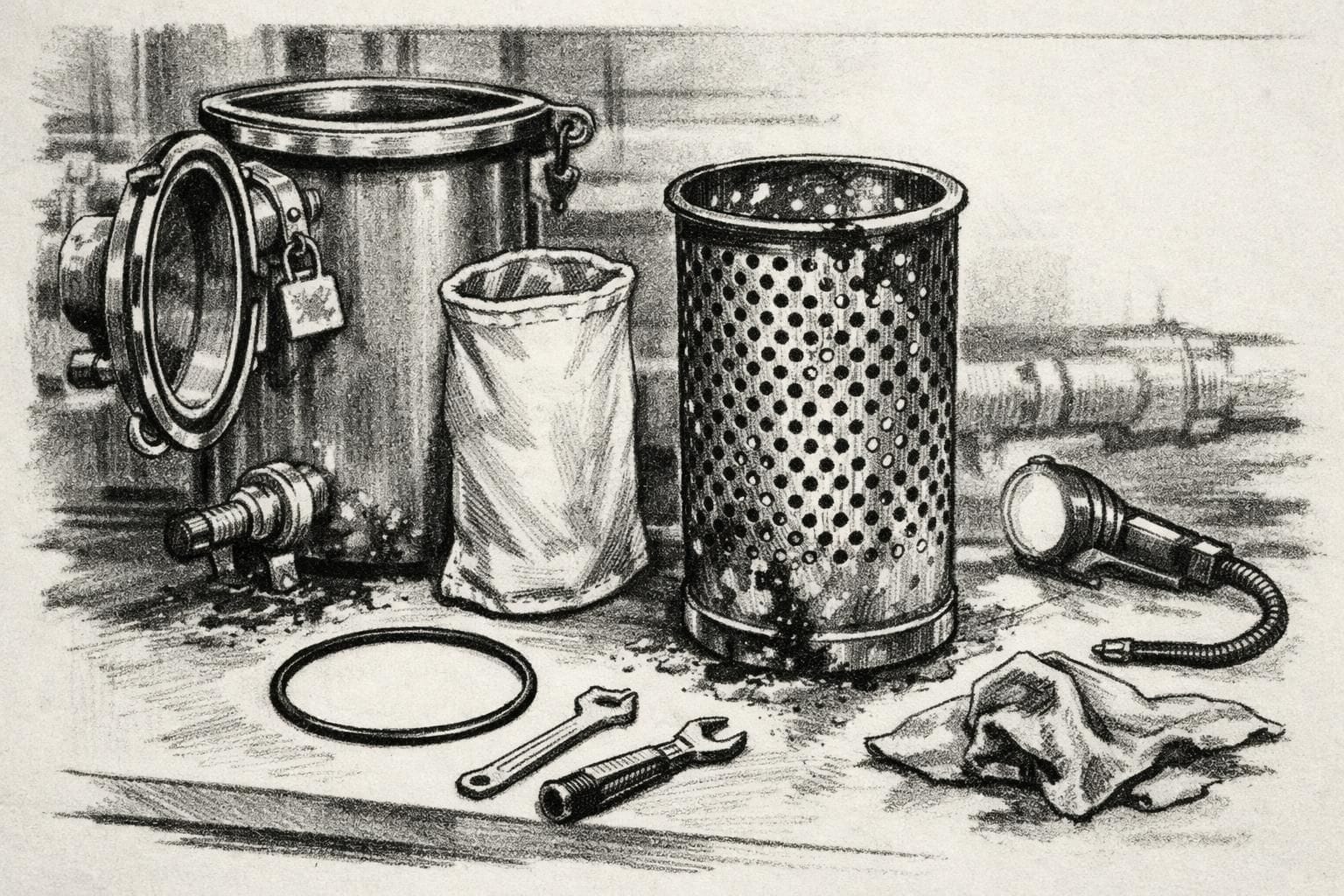
Once the basket is removed, you can see areas of the housing that normally remain hidden.
That is another maintenance opportunity.
Solids frequently settle in low areas.
Material can accumulate around the drain.
Depending upon the process, deposits can trap corrosive material against the housing.
Clean the interior as required for the service and look at the pressure-containing equipment itself.
You’re looking for changes:
Pitting.
Corrosion.
Erosion.
Unusual discoloration.
Cracking.
Coating failure.
Product buildup.
Evidence of leakage.
Nobody needs to turn every filter change into a formal pressure-vessel inspection.
But ignoring an obvious developing condition because “we’re only here to change the bag” doesn’t make much sense either.
And Then There’s the Seal
The lid seal has a similarly thankless job.
It gets compressed.
Released.
Compressed again.
Exposed to process chemistry.
Exposed to temperature.
Cleaned.
Possibly exposed to cleaning chemicals.
And eventually somebody responds to a leaking lid by tightening the closure harder.
That is not a maintenance strategy.
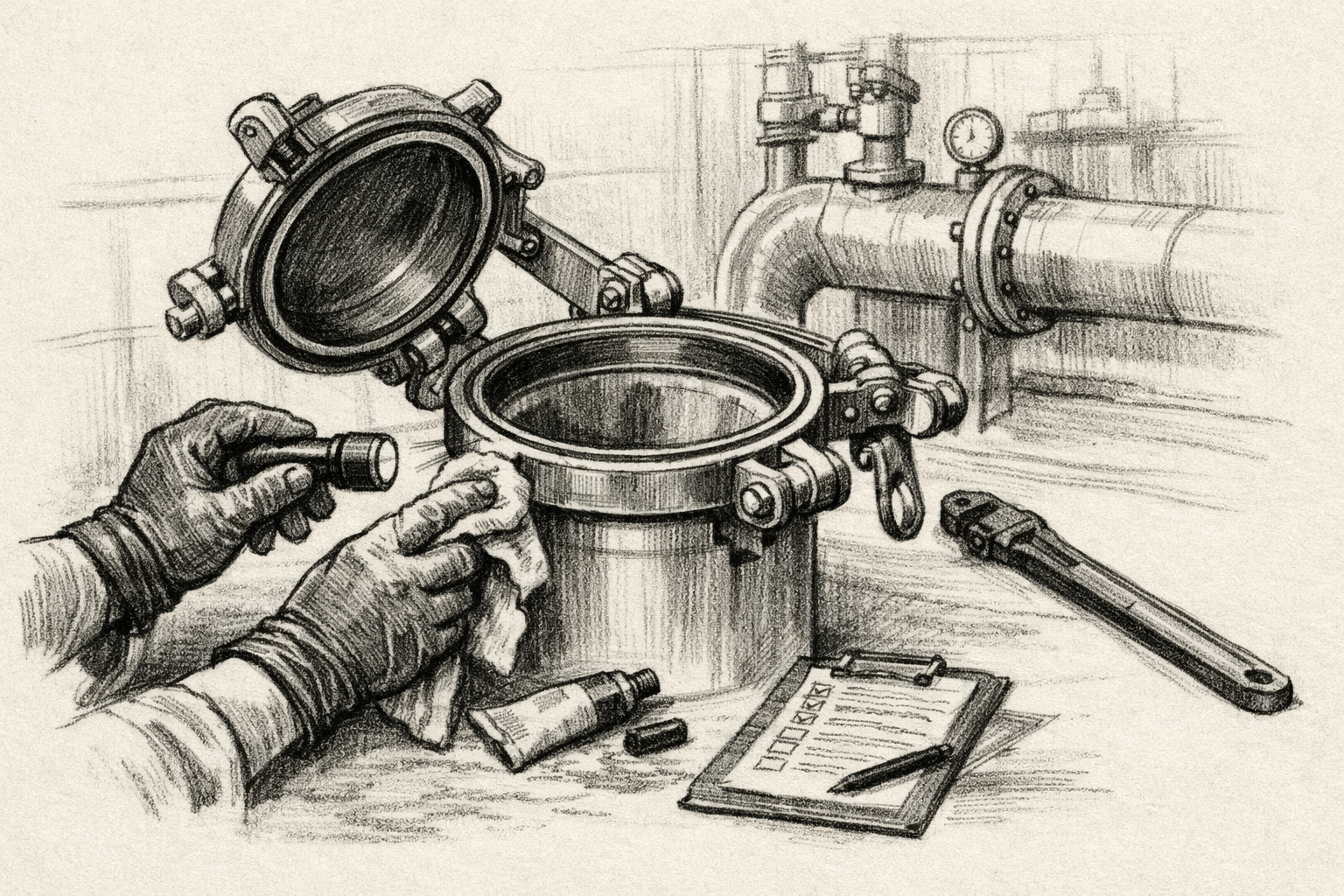
Inspect the O-ring or gasket when the housing is opened.
Look for cuts, flattening, swelling, hardening, cracking, abrasion and chemical deterioration.
Clean its mating surfaces.
Inspect the groove.
And remember something surprisingly easy to forget:
An O-ring that fits isn’t necessarily the right O-ring.
The elastomer has to be compatible with the process chemistry and temperature as well as the physical dimensions of the housing.
Five Minutes While It’s Open
This is the larger point.
The expensive part of inspecting these components isn’t usually the inspection.
It’s getting the process shut down, isolated, depressurized and the housing opened.
But you’re already doing all of that to change the filter bag.
The incremental cost of looking at the basket, seal and housing while they’re accessible is small.
The value of finding deterioration before it becomes a failure can be considerably larger.
Next week
We’re going after another neglected component:
the closure bolts.
If the nuts are getting harder to turn, operators are reaching for longer wrenches, or somebody has to fight the lid every time the filter is changed, the housing is giving you a warning.
The answer isn’t a bigger wrench.
Technical contribution: Clear Blue Filtration
Follow the equipment manufacturer’s maintenance requirements and facility safety procedures. Conditions affecting a pressure boundary should be evaluated by appropriately qualified personnel.