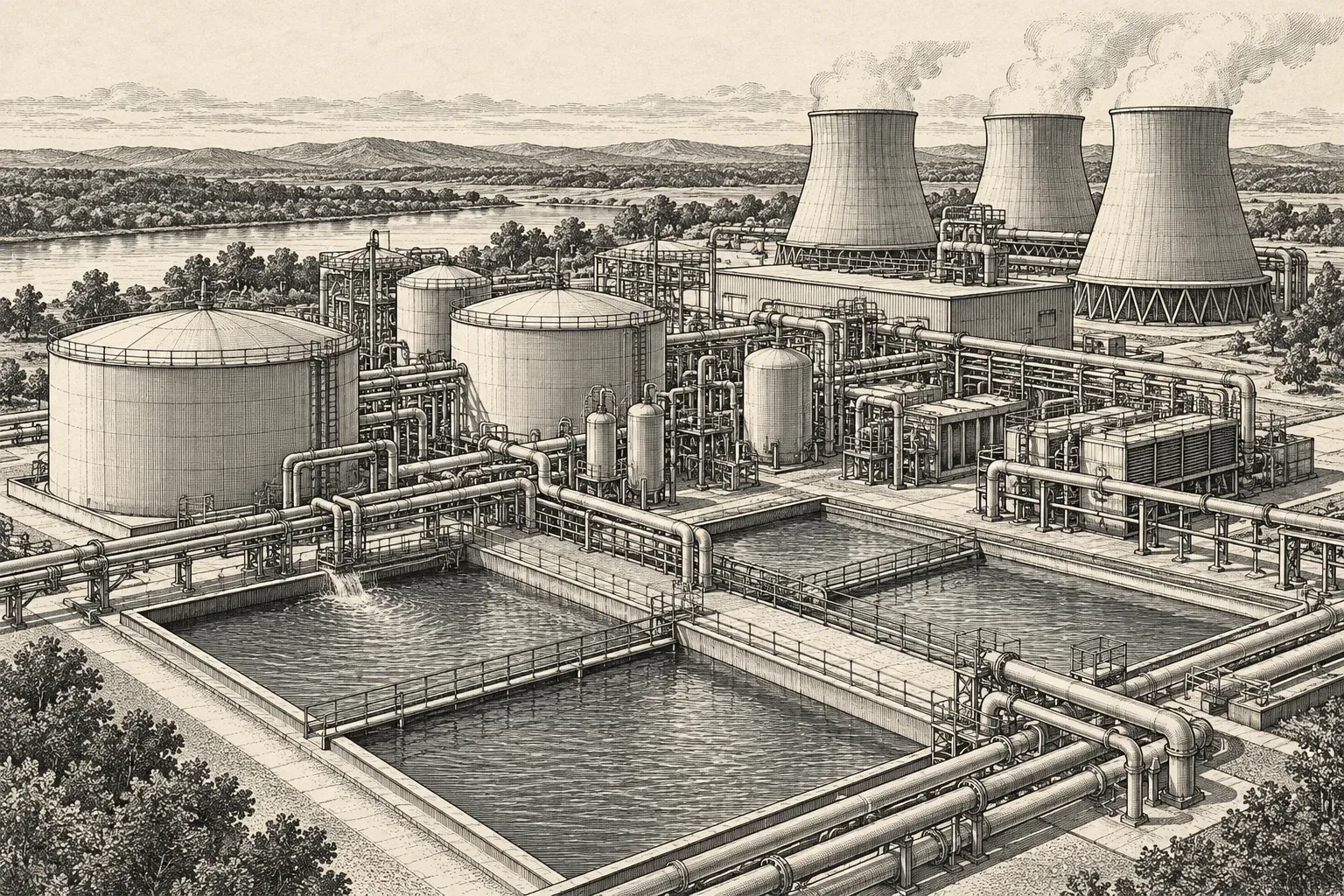
Water reuse is a useful market to examine without reaching immediately for a market-size forecast. The more practical question is what an industrial customer needs the recovered water to do.
EPA’s industrial reuse resources describe uses ranging from manufacturing to cooling, with water supplied from municipal wastewater or recovered from onsite processes. That is a set of different applications, not one uniform filter requirement.
The end use defines the opportunity
A proposal that begins with a cartridge model has skipped an important conversation. The buyer first needs a defined source water, a destination for the treated water and a documented quality target. Our editorial view is that suppliers are easier to compare when they respond to the same duty rather than to a loosely worded request for a “reuse filter.”
The distinction also matters for cost. The Berkeley Lab survey examines manufacturing wastewater and the energy requirements associated with reuse. It frames the issue around contaminants and treatment needs rather than assuming every recovered gallon costs the same.
A treatment train is not a single product
DuPont’s wastewater reuse material separates suspended-solids removal with ultrafiltration from dissolved-solids removal with reverse osmosis. As manufacturer literature, it is useful for understanding the proposed roles of those technologies; it does not establish which equipment will work at a particular plant.
For a purchasing discussion, ask what enters each stage, what leaves it and what happens to the waste stream. A quotation should make exclusions visible: pretreatment, cleaning, monitoring, concentrate handling and commissioning can change the scope substantially.
Questions worth putting in the first meeting
- Which end use will accept the recovered water, and who owns its quality specification?
- What source-water measurements and variability does the proposal use?
- What performance must be demonstrated before acceptance?
- Which operating costs and waste-handling responsibilities are included?
These are editorial screening questions, not a complete design checklist. They help expose whether two proposals solve the same problem.
There is also a regulatory boundary. EPA notes that industrial reuse permissions and specifications vary by state. Confirm the applicable requirements with the responsible authority and qualified project team; a vendor's brochure is not a permit.
The commercial lesson is modest but useful: describe the water's next job before discussing the filter's next sale. This article does not estimate market growth, forecast spending or rank suppliers.
Sources and further reading
- EPA: industrial water reuse resources
- Lawrence Berkeley National Laboratory: manufacturing wastewater and energy requirements for reuse
- DuPont: industrial wastewater reuse
Sources reviewed October 4, 2026. Manufacturer literature describes particular products and is not an independent performance endorsement. This article is an editorial guide, not a site-specific design or operating procedure.