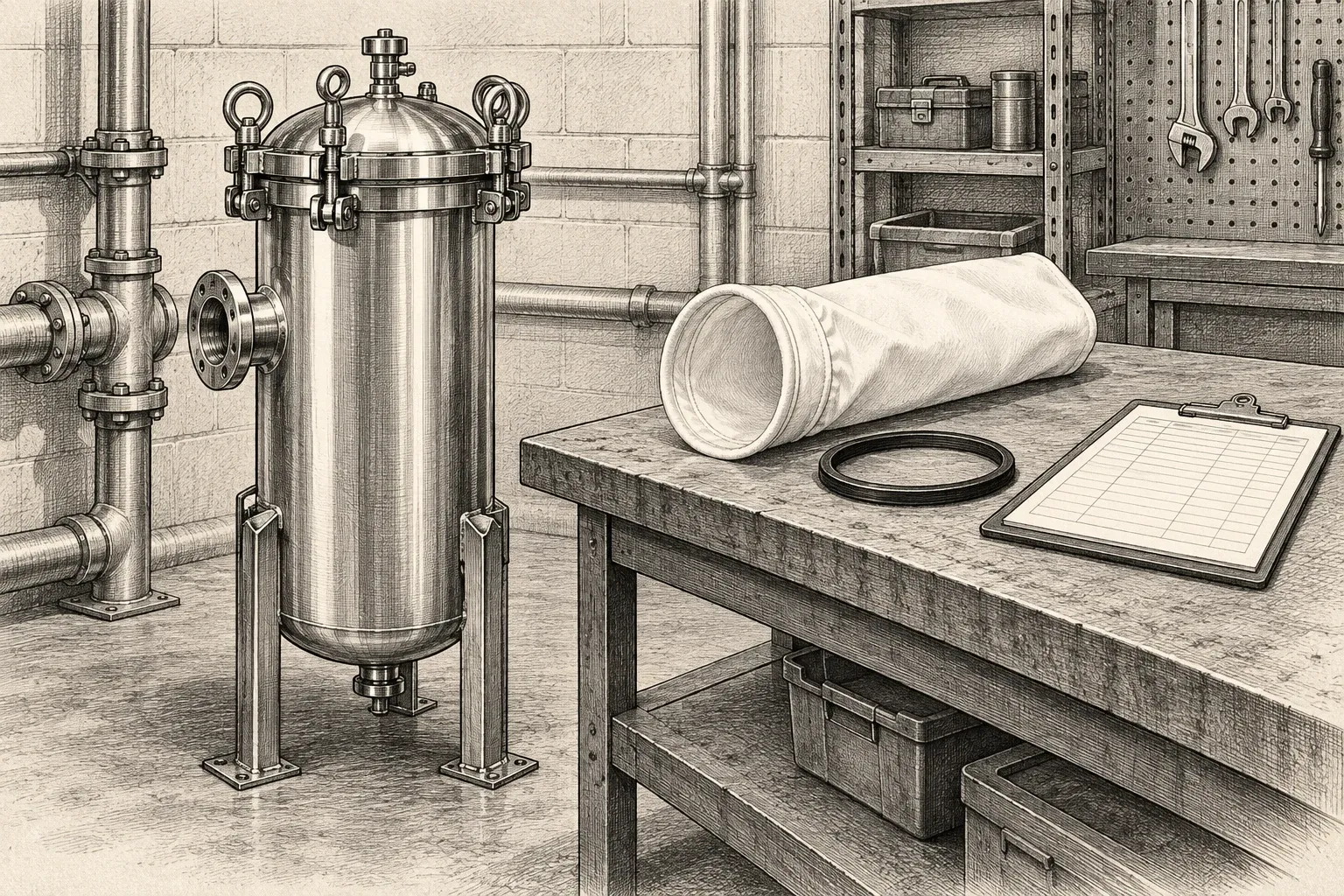
A replacement filter bag is visible evidence that something was changed. It is not, by itself, evidence that the right replacement was selected or that the equipment was returned to service correctly.
Our editorial recommendation is to treat the maintenance record as part of the job. It should connect the asset, replacement part, approved procedure and observations that the next shift will need.
Start with the safety boundary
OSHA’s hazardous-energy guidance explains that unexpected startup and release of stored energy during servicing can cause serious injury or death. Filter maintenance belongs inside the employer's applicable energy-control program and the equipment manufacturer's instructions—not inside an improvised sequence from an article.
OSHA’s hazard-communication guidance also emphasizes accessible chemical-hazard information and worker training. The process liquid and residues matter as well as the hardware. Qualified personnel should determine the applicable isolation, depressurization, temperature, chemical-exposure and disposal controls before work begins.
Capture identification, not just “bag replaced”
Useful record fields include the asset identifier, housing model, replacement part number, media and seal identification, date, work-order number and procedure revision. Record any mismatch or uncertainty for resolution rather than treating a similar-looking part as an approved substitute.
Eaton’s UNIBAG documentation illustrates why the assembly details deserve attention: it discusses ring materials, welded construction and correct alignment in the restrainer basket, and recommends its insertion tool for that product. Those are product-specific considerations, not a universal instruction for all bags or housings.
Make observations comparable
If the site's approved program uses differential pressure or flow readings, record the operating context alongside them. A number without a flow condition or measurement point may be hard to compare with the next service event. Describe the observed condition of the removed element and any abnormality through the site's reporting process.
The record should identify who completed the required checks and who authorized return to service under the site's procedure. This article deliberately does not prescribe valve positions, venting steps, closure torque, a replacement pressure threshold or a universal inspection interval.
The next shift is the real audience
A good record makes a recurring problem easier to investigate: Was the same approved part used? Did the duty change? Was an unresolved condition carried forward? That is the difference between documenting an action and preserving useful operating history.
Use the manufacturer's current manual and the employer's approved procedure as the authority. This is a documentation guide, not instructions for opening or servicing a pressure vessel.
Sources and further reading
- OSHA: control of hazardous energy
- OSHA: hazard communication
- Eaton: UNIBAG filter bag construction and installation guidance
Sources reviewed October 4, 2026. Manufacturer literature describes particular products and is not an independent performance endorsement. This article is an editorial guide, not a site-specific design or operating procedure.
Watch the short version
AI-generated editorial illustrations and synthetic narration. Subscribe to the newsletter.